



Pool Ownership and the Three Most Common Myths (2 min read)
Pool Ownership: 3 Common Myths That Can Cost You Thousands (2-Minute Read)
Owning a swimming pool is a major investment — yet many homeowners unknowingly follow outdated or incorrect advice about pool care. These misconceptions often lead to expensive repairs, premature equipment failure, and water quality issues.
The challenge? Damage caused by poor chemistry may not show up for years, making it difficult to connect the problem to the maintenance habits that caused it.
Below are three of the most common pool ownership myths — and what every homeowner should understand to protect their pool.
Myth #1: “We rarely use the pool, so it doesn’t need much maintenance.”
One of the biggest misunderstandings is that pool chemistry only changes when people are swimming. In reality, your pool is constantly exposed to the environment.
Even without swimmers, contaminants enter your water every day, including:
- Rain and airborne pollutants
- Leaves and organic debris
- Pollen and nearby plant life
- Insects and animals
- Bacteria and microorganisms
These factors continuously alter your water chemistry.
What this means:
Regular water testing and chemical balancing are essential — whether your pool is used daily or only occasionally. Neglecting this can lead to algae growth, unsafe water, and long-term equipment damage.
👉 SEO Tip: Homeowners searching “Do I need to maintain a pool if I don’t use it?” should immediately find this answer.
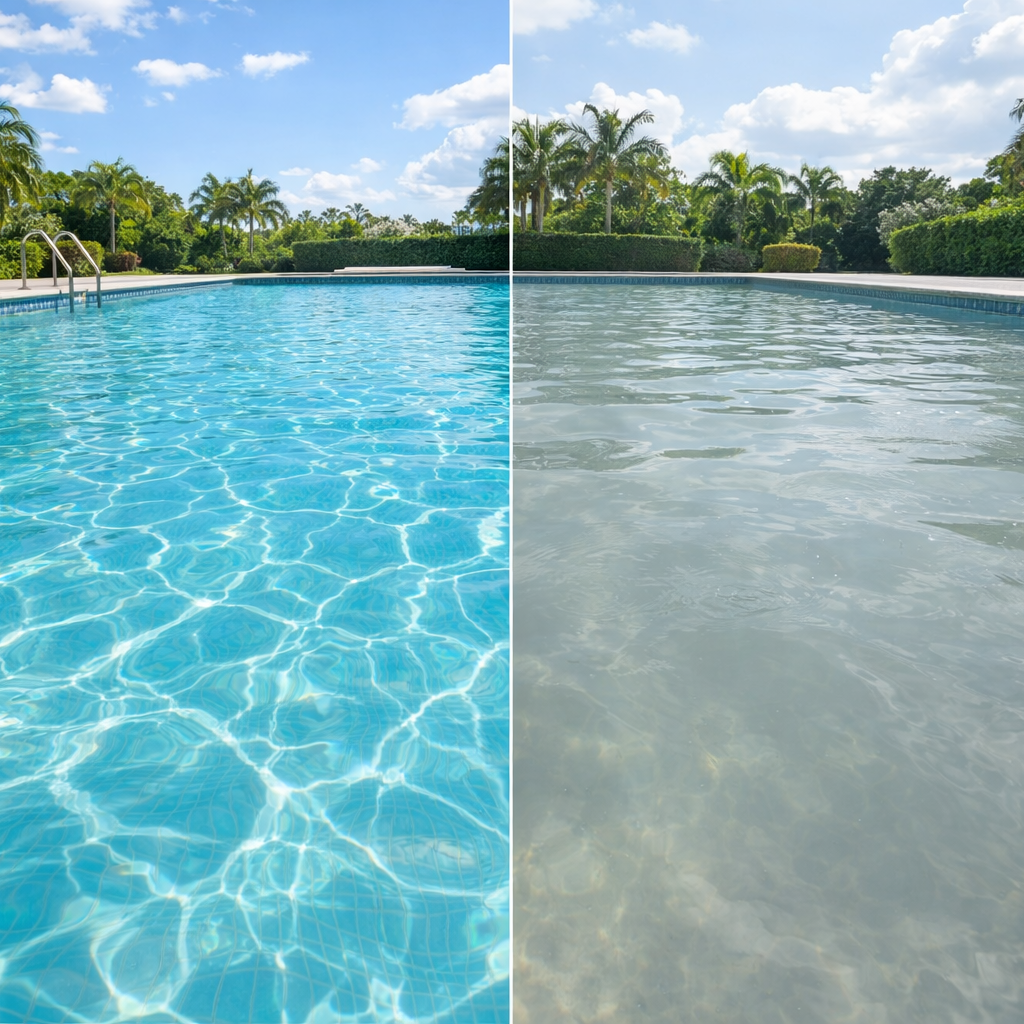
Myth #2: “If the water is clear, the pool is healthy.”
Crystal-clear water can create a false sense of security. Many corrosive chemicals — including high chlorine levels and acid — are completely transparent.
A pool can look perfect while silently damaging expensive components.
Signs of over-chlorination or poor chemistry include:
- Faded vinyl liners or fiberglass
- Yellowing plastic (often called chlorine burn)
- Loud or failing pool pumps
- Heater breakdown from corroded copper heat exchangers
Think of the copper roof on Parliament in Ottawa — once bright and shiny, now green from oxidation. Similar corrosion can occur inside your pool equipment when chemistry is not properly maintained.
⚠️ Important: Saltwater pool owners are especially prone to this myth. Salt systems continuously produce chlorine, and without routine testing, levels can easily become too high.
Myth #3: “Saltwater pools are maintenance-free.”
Saltwater pools are often marketed as low-maintenance, but they are not maintenance-free. They are still chlorine pools — the system simply generates chlorine from salt.
Every saltwater pool owner should know two critical facts:
1. pH Naturally Rises
Salt systems cause pH levels to climb throughout the season. Without adjustment using acid or a pH reducer, the water can become scale-forming and damaging.
2. Chlorine Output Must Be Monitored
If chlorine production is set too high, the water becomes corrosive to swimmers and equipment. Too low, and bacteria and algae can quickly take hold.
Bottom line: Clear water does not guarantee balanced water.
Why Proper Pool Chemistry Protects Your Wallet
Many homeowners are shocked when a heater fails after only a few seasons. However, faded liners, brittle plastic, noisy pumps, and high salt output often reveal the real cause — inconsistent water chemistry.
It’s no surprise that manufacturers increasingly request documented water tests when processing warranty claims.
Think of Your Pool Like a High-Performance Vehicle
Building a pool typically costs between $35,000 and $300,000. It should be treated like any precision machine.
Consider a Ferrari:
- It requires the right fuel
- Proper maintenance
- Routine inspections
- Knowledgeable operation
Ignore those requirements, and repairs become inevitable — and expensive. Your pool deserves the same level of care.
This is especially important for homeowners who inherit a pool when purchasing a property and may not yet understand its maintenance demands.
How to Protect Your Pool Investment
The best thing a pool owner can do is stay proactive:
✅ Test water regularly
✅ Maintain proper chemical balance
✅ Monitor salt system settings
✅ Address small issues early
✅ Partner with a trusted pool professional if needed
Consistent maintenance doesn’t just keep the water looking good — it extends the life of your equipment and helps you avoid costly surprises.
Final Takeaway
Clear water is not enough. A healthy pool requires consistent attention and informed care.
By understanding these common myths and committing to proper maintenance, you can protect your investment, improve safety, and enjoy your pool for many years to come.
Written by: Mark Leaman President, Vaughan Pool Supplies York Pool Services Inc. Etobicoke Pool Services Inc. Richmark Pool Services Inc.