
6be46918-77c7-4809-b535-dacffb160bc4

HELP, MY HEATER ISN’T WORKING! (POSSIBLE CAUSES)

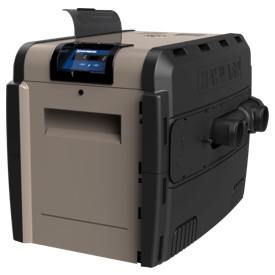
Heater Error Messages: Water Flow Troubleshooting Guide

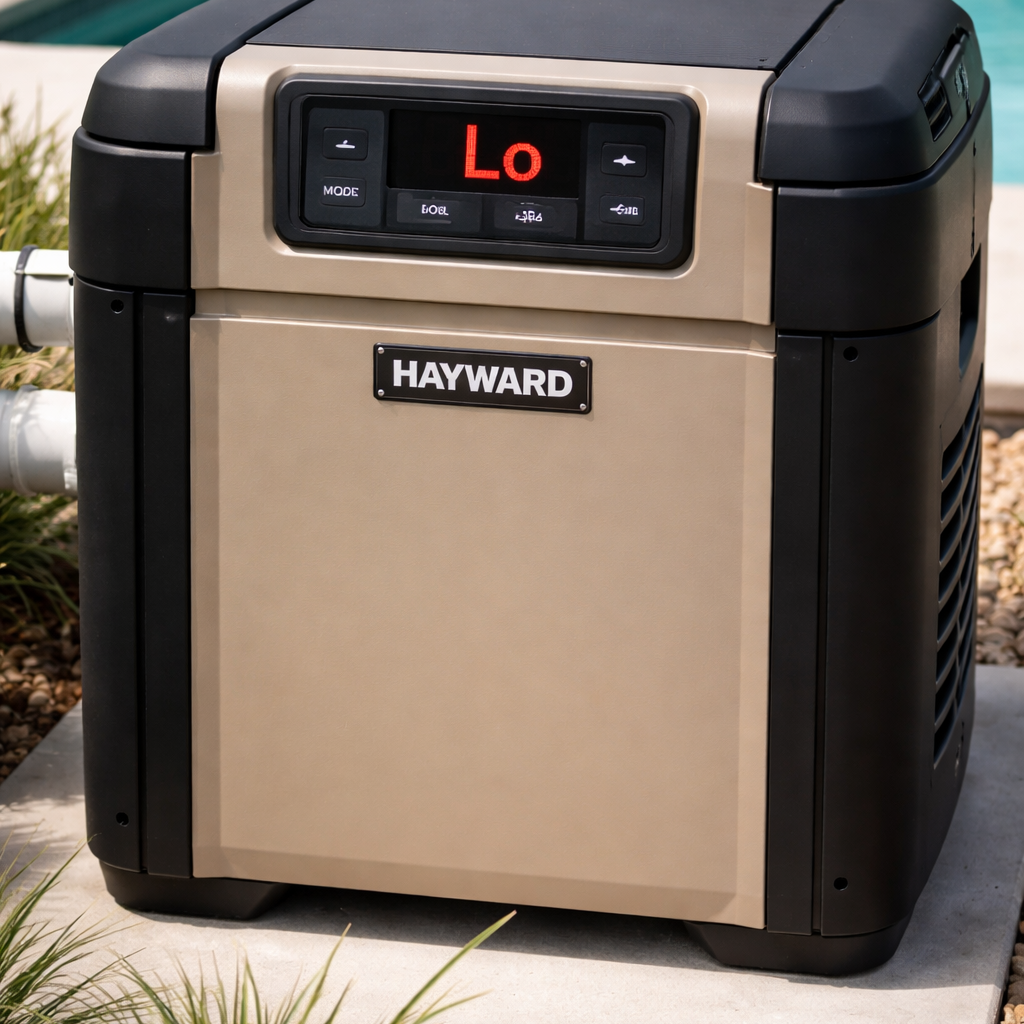
If your heater displays any of the following error messages, the issue is most likely related to water flow, not the heater itself:

  • “LO” – Hayward
  • “Check Flow” – Jandy
  • “Water SW Open” – Raypak/Rheem

These errors occur because the heater is designed to not turn on when water flow is insufficient, resulting in cold pool water. Before calling a technician, check the following:

1. Pump Status

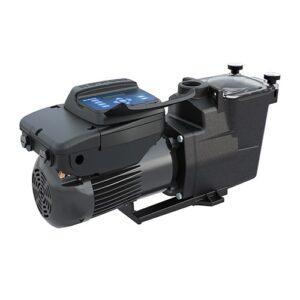
A pump with poor flow may not deliver enough water to the heater, triggering these error messages. Common causes include:

  • De-primed pump: Water should reach the top of the pump lid.
    Solution: Turn off the pump, open the lid, fill with water, close the lid, and restart.
  • Low pool water level: Keep water between ½ – ¾ of the skimmer opening. Low levels can introduce air, causing the pump (and heater) to stop. Refill and re-prime the pump.
  • Clogged skimmer or pump basket: Check and empty skimmer and pump baskets regularly to ensure proper flow.

2. Filter Status

Dirty or clogged filters can also reduce flow. Signs include high filter pressure and weak return flow.

  • Sand filter: Backwash to flush out debris. Replace sand every 5 years.
  • Cartridge filter: Remove cartridges to clean or replace.
    • Cleaning methods: Power wash (keep distance to avoid damage), use a pleat comb, or chemical-based filter cleaner.

3. Additional Considerations

  • These steps assume all equipment is serviceable and the heater’s pressure switch is functional.
  • Corroded electrical connections inside the heater can cause intermittent operation.
  • Always eliminate non-heater causes first before scheduling a service call.

Note: These errors do not indicate ignition or gas-related problems. Ignition failures involve the igniter, flame sensor, or other gas/heater components. This guide only covers the water-flow related errors listed above.


Summary

Most “LO / Check Flow / Water SW Open” messages point to water flow issues. Check:

  1. Pump priming and operation
  2. Pool water level
  3. Skimmer & pump baskets
  4. Filter condition

If all of the above are in order and the issue persists, it may be time to consult a professional.


Need help? Visit us at Vaughan Pool Supplies:
545 N. Rivermede Rd, Unit 103, Concord, ON
905-597-SWIM

Written by: Mark Leaman President, Vaughan Pool Supplies York Pool Services Inc. Etobicoke Pool Services Inc. Richmark Pool Services Inc.
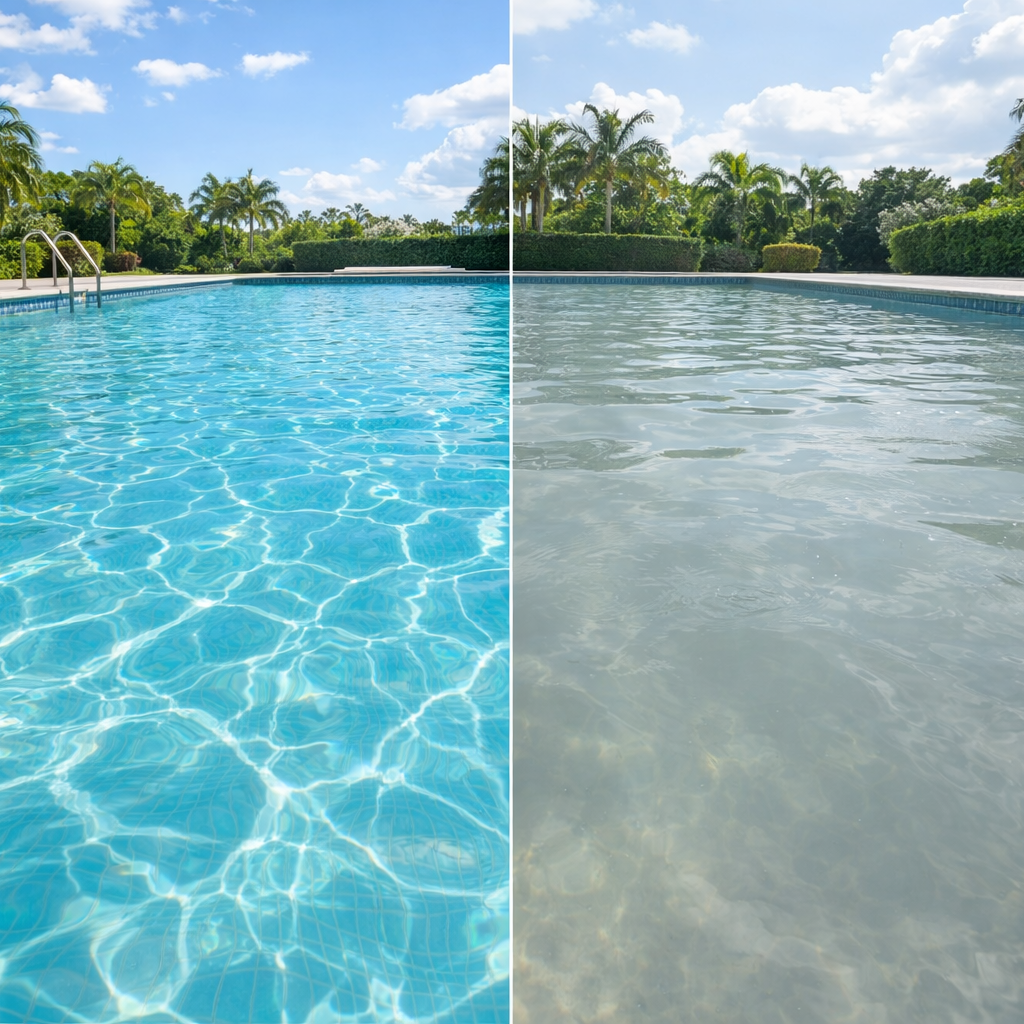
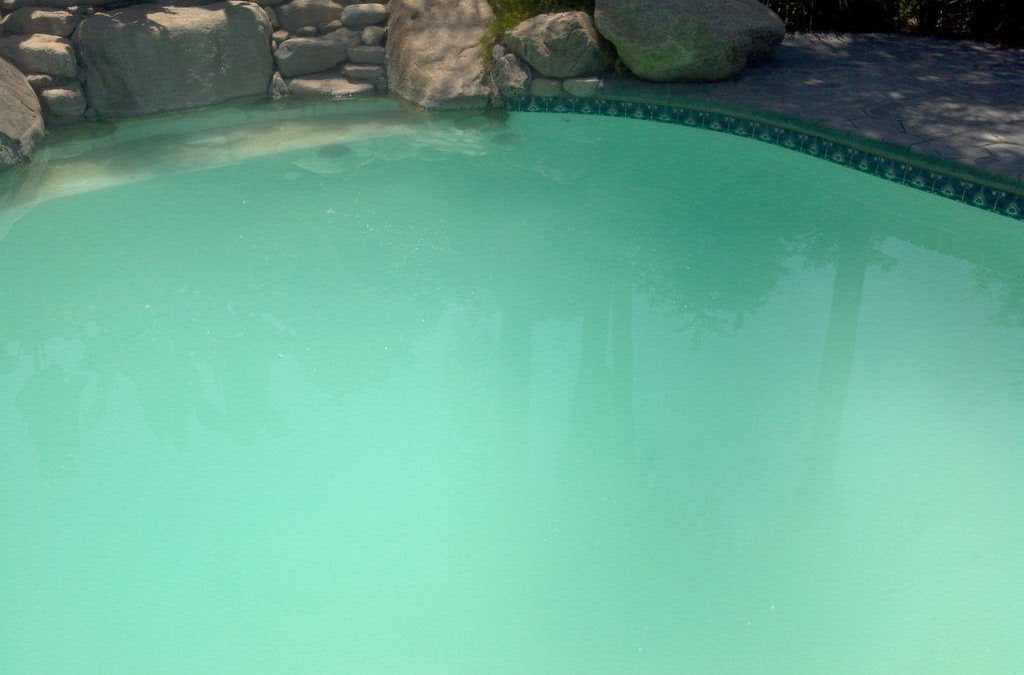
Clear meets cloudy at the pool

Pool Ownership and the Three Most Common Myths (2 min read)

Pool Ownership: 3 Common Myths That Can Cost You Thousands (2-Minute Read)

Owning a swimming pool is a major investment — yet many homeowners unknowingly follow outdated or incorrect advice about pool care. These misconceptions often lead to expensive repairs, premature equipment failure, and water quality issues.

The challenge? Damage caused by poor chemistry may not show up for years, making it difficult to connect the problem to the maintenance habits that caused it.

Below are three of the most common pool ownership myths — and what every homeowner should understand to protect their pool.


Myth #1: “We rarely use the pool, so it doesn’t need much maintenance.”

One of the biggest misunderstandings is that pool chemistry only changes when people are swimming. In reality, your pool is constantly exposed to the environment.

Even without swimmers, contaminants enter your water every day, including:

  • Rain and airborne pollutants
  • Leaves and organic debris
  • Pollen and nearby plant life
  • Insects and animals
  • Bacteria and microorganisms

These factors continuously alter your water chemistry.

What this means:
Regular water testing and chemical balancing are essential — whether your pool is used daily or only occasionally. Neglecting this can lead to algae growth, unsafe water, and long-term equipment damage.

👉 SEO Tip: Homeowners searching “Do I need to maintain a pool if I don’t use it?” should immediately find this answer.


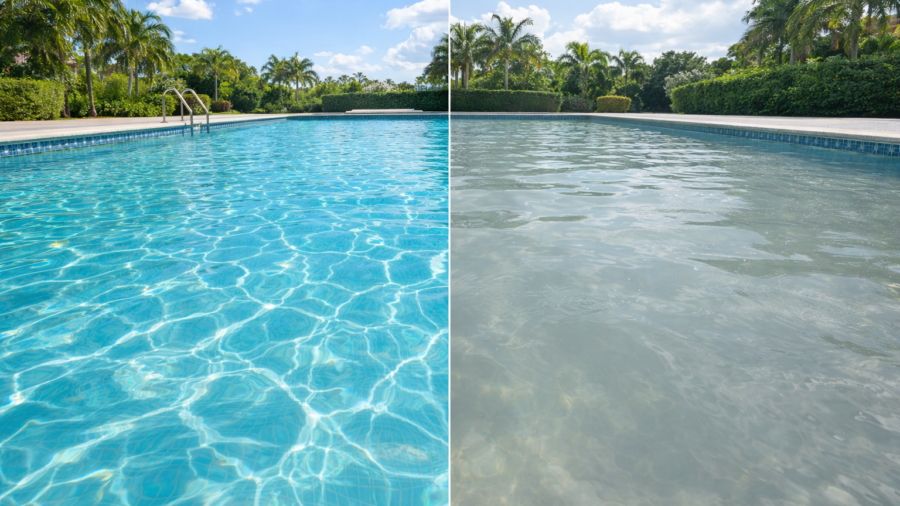
Myth #2: “If the water is clear, the pool is healthy.”

Crystal-clear water can create a false sense of security. Many corrosive chemicals — including high chlorine levels and acid — are completely transparent.

A pool can look perfect while silently damaging expensive components.

Signs of over-chlorination or poor chemistry include:

  • Faded vinyl liners or fiberglass
  • Yellowing plastic (often called chlorine burn)
  • Loud or failing pool pumps
  • Heater breakdown from corroded copper heat exchangers

Think of the copper roof on Parliament in Ottawa — once bright and shiny, now green from oxidation. Similar corrosion can occur inside your pool equipment when chemistry is not properly maintained.

⚠️ Important: Saltwater pool owners are especially prone to this myth. Salt systems continuously produce chlorine, and without routine testing, levels can easily become too high.


Myth #3: “Saltwater pools are maintenance-free.”

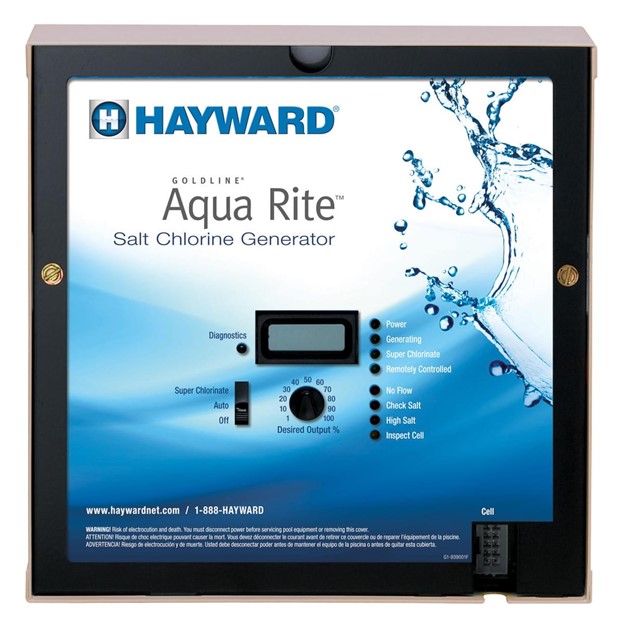
Saltwater pools are often marketed as low-maintenance, but they are not maintenance-free. They are still chlorine pools — the system simply generates chlorine from salt.

Every saltwater pool owner should know two critical facts:

1. pH Naturally Rises

Salt systems cause pH levels to climb throughout the season. Without adjustment using acid or a pH reducer, the water can become scale-forming and damaging.

2. Chlorine Output Must Be Monitored

If chlorine production is set too high, the water becomes corrosive to swimmers and equipment. Too low, and bacteria and algae can quickly take hold.

Bottom line: Clear water does not guarantee balanced water.


Why Proper Pool Chemistry Protects Your Wallet

Many homeowners are shocked when a heater fails after only a few seasons. However, faded liners, brittle plastic, noisy pumps, and high salt output often reveal the real cause — inconsistent water chemistry.

It’s no surprise that manufacturers increasingly request documented water tests when processing warranty claims.

Think of Your Pool Like a High-Performance Vehicle

Building a pool typically costs between $35,000 and $300,000. It should be treated like any precision machine.

Consider a Ferrari:

  • It requires the right fuel
  • Proper maintenance
  • Routine inspections
  • Knowledgeable operation

Ignore those requirements, and repairs become inevitable — and expensive. Your pool deserves the same level of care.

This is especially important for homeowners who inherit a pool when purchasing a property and may not yet understand its maintenance demands.


How to Protect Your Pool Investment

The best thing a pool owner can do is stay proactive:

✅ Test water regularly
✅ Maintain proper chemical balance
✅ Monitor salt system settings
✅ Address small issues early
✅ Partner with a trusted pool professional if needed

Consistent maintenance doesn’t just keep the water looking good — it extends the life of your equipment and helps you avoid costly surprises.


Final Takeaway

Clear water is not enough. A healthy pool requires consistent attention and informed care.

By understanding these common myths and committing to proper maintenance, you can protect your investment, improve safety, and enjoy your pool for many years to come.

Written by: Mark Leaman President, Vaughan Pool Supplies York Pool Services Inc. Etobicoke Pool Services Inc. Richmark Pool Services Inc.
unnamed

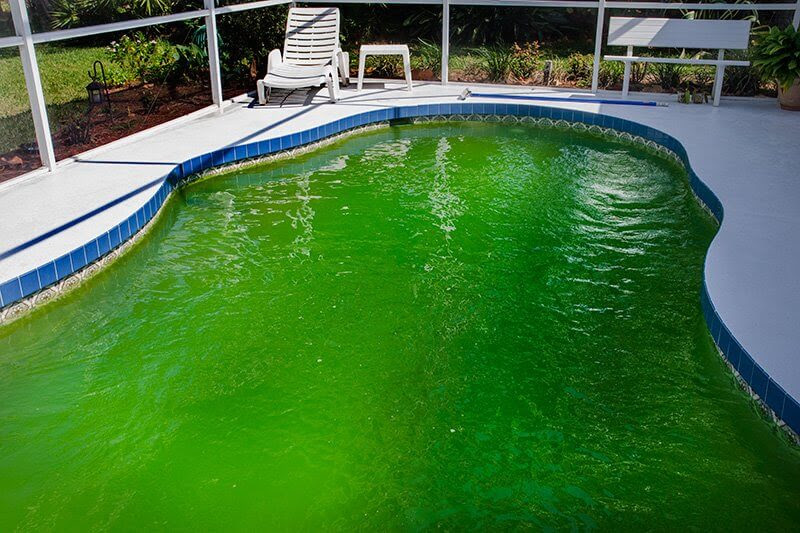
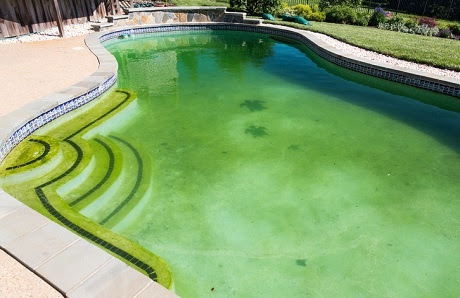
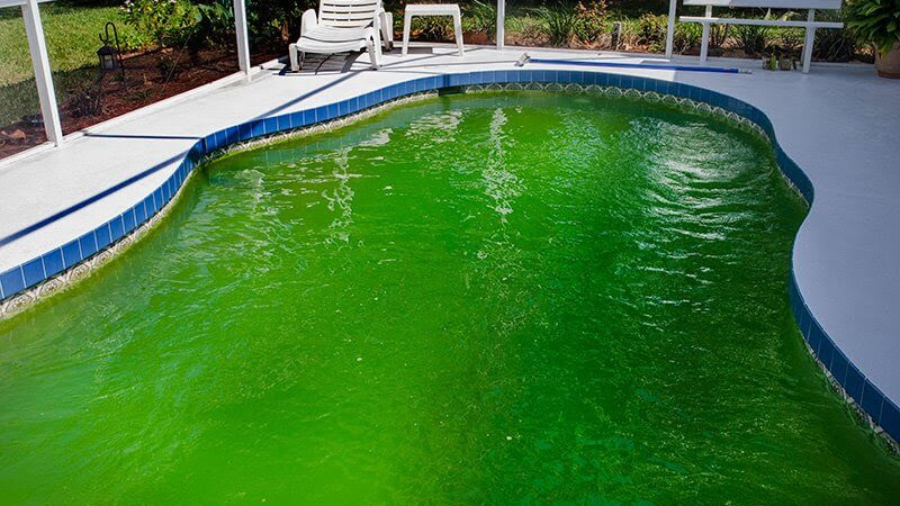
Why Is My Pool Green?

Few things panic a pool owner faster than pulling back the cover and seeing green water staring back at them. It looks dramatic, feels urgent, and raises the same question every time:

“What went wrong?”

The short answer: your pool didn’t suddenly turn green.
The long answer is more useful — and fixable.

Green Pool ≠ One Problem

A green pool is almost always the result of several things lining up at once. Algae is opportunistic — it doesn’t need much encouragement.

Here are the most common reasons your pool turns green:


1. Not Enough Sanitizer

Chlorine (or bromine, in spas) is what keeps algae from growing.
If sanitizer levels drop too low — even briefly — algae can take hold.

This often happens:

  • After heavy rain
  • During heat waves
  • When the pool is used more than usual
  • When chlorine demand increases but dosing doesn’t

Important:
You can have chlorine in the water and still not have effective chlorine. Which brings us to…


2. Poor Water Balance

Sanitizer works best within a narrow chemical window. If pH, alkalinity, or stabilizer (CYA) are out of range, chlorine becomes less effective — sometimes dramatically so.

Common scenarios:

  • High pH → chlorine becomes sluggish
  • Excess stabilizer → chlorine is “locked up”
  • Low alkalinity → chemistry becomes unstable and unpredictable

The water may test fine at a glance but still be primed for algae.


3. Inadequate Circulation or Filtration

Algae loves still water.

If your pump isn’t running long enough, your filter is dirty, or certain areas of the pool don’t circulate well, algae can establish itself even when chemistry looks decent.

Watch for:

  • Dead spots on steps or ledges
  • Poor skimmer action
  • Pressure gauges you’ve learned to ignore

Clear water doesn’t always mean clean water.


4. Organic Contamination

Leaves, pollen, sunscreen, body oils, and debris all consume chlorine.

After storms, pool parties, or long periods without maintenance, sanitizer demand spikes — and algae takes advantage of the gap.

This is why pools often turn green:

  • Right after opening
  • After vacations
  • After heavy winds or rain

5. “I Shocked It — Why Is It Still Green?”

Shocking a pool is not a magic spell.

If:

  • The water is out of balance
  • The filter can’t keep up
  • The algae load is already established

…then shock alone won’t fix it. In some cases, it can even make things worse by clouding the water without fully killing the algae.


So… How Do You Fix a Green Pool?

There’s no single universal recipe — and that’s the point.

A proper fix requires:

  1. Accurate water testing
  2. Correcting balance first
  3. Applying the right sanitizer strategy
  4. Supporting the process with filtration and circulation

Skipping steps leads to frustration, wasted chemicals, and repeat problems.


The Takeaway

A green pool isn’t a failure — it’s a signal.

It’s your pool telling you that:

  • Chemistry is out of sync
  • Sanitizer demand exceeded supply
  • Or circulation isn’t doing its job

The good news?
Green pools are almost always recoverable — when treated correctly.

If you’re guessing, you’re gambling.
If you’re testing properly, you’re in control.

pool-cleaning

Buying a home with a pool?

Buying a home with a pool?
Here’s what you need to know.

Article By: Mark Leaman, President | York Pool Services Inc.

The home inspection

Many home inspectors have the skills and the knowledge to evaluate the status of a swimming pool. But real estate agents and homebuyers alike should be aware of their limitations:

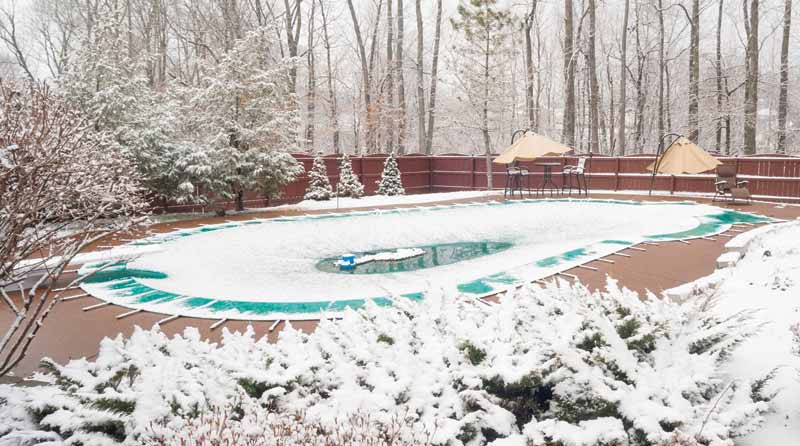
No home inspector is qualified to report on a pool that’s not open and operational.

While a pump can certainly be turned on and off in the winter to check if the motor works, there’s no way to run a pool heater or saltwater chlorinator without water flowing through the system to activate the flow/pressure switch. That means that when it comes to buying a pool home in the winter, buyer beware.

Even if a pool is open, a home inspector can only comment on what he or she sees.

A beautiful new liner may be covering up cracks in the concrete floor under the pool. Or, the liner may appear intact but there are tiny leaks in gasketed areas like the skimmer, returns, main drain, pool light or stairs. In fact, a minute leak can lower a pool’s waterline by as much as an inch a day. This is the type of thing that home inspectors will avoid commenting on simply because it’s beyond the scope of their inspection. Instead, they will make more general comments like:

The good news is that you can get a more in-depth inspection. But given the lightning-fast pace of the Toronto real estate market, you’ll need to act quickly. Here’s what you can do:

1. Hire a pool company to do a secondary inspection.

In the last couple of years, pool equipment has advanced and become computer-based. So while the average home inspector may be able to evaluate a conventional heater, he or she may not know anything about saltwater computers, ozonators, automatic pool controls, etc. But a pool professional will. Pool professionals regularly attend seminars to learn about the latest innovations, equipment and products, so they have a definite competitive advantage over an inspector.

2. Hire a leak detection company.

Leak detection companies use highly sensitive sonar equipment and other complex machinery to determine if there is a leak in any plumbing. These companies are very familiar with pools and often even have specialized pool departments. Companies like Canada Leak Detection offer this service, but it can take weeks to months to get an appointment. Fortunately, I partner with several leak detection specialists regularly, and can recommend one that best suits your needs, timeframe and budget.

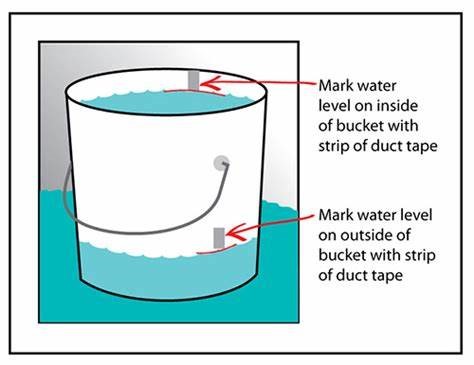
3. Perform the Bucket Test.

To check for a leak in any pool, do this simple test.

A. Place a bucket onto the steps of the pool, ensuring that the top of the bucket is not underwater.

B. Add enough water to the bucket so that it does not float. If necessary, add a brick to the bottom of the bucket to help keep it in position.

C. Mark the waterline with duct tape on the outside of the bucket.

D. Mark the waterline with duct tape on the inside of the bucket.

The pool’s waterline outside the bucket should not be in direct contact with the water inside the bucket, but the bucket must be submerged enough that the water temperature outside the bucket influences the water temperature inside it.

E. Leave the bucket for a few days. When you return, you may notice the following scenarios:

i. The outer waterline has lowered in comparison to the outer duct tape more than the bucket’s inner waterline. THIS INDICATES A LEAK SOMEWHERE.

ii. The inner and outer waterlines have lowered almost exactly by the same amount. THIS INDICATES THAT THERE IS LIKELY NO LEAK AND THAT THE WATER HAS SIMPLY EVAPORATED.

iii. Both waterlines have not moved. THIS MEANS THERE ARE NO LEAKS.

If you have any questions about buying a home with a pool or would like to consult with us to weigh the risks, costs and blind spots, please get in touch with us. We’re here to help you make an educated decision.