


Failing Upward: When Old Pool Equipment Breaks, Upgrade Smarter
Pool equipment failures are never convenient. A pump dies mid-season, a salt system gives up after years of service, or an aging piece of equipment finally reaches the end of its life. Most pool owners see this as a problem to solve as quickly—and cheaply—as possible.
But in reality, equipment failure is often the best opportunity to upgrade—and to do so in a way that saves money, adds functionality, and future-proofs your pool.
Why Retrofit Matters in Our Area
In our local market, roughly 90% of pools are built around Hayward products. That matters.
A dominant installed base creates a closed, efficient upgrade path:
- Lower replacement costs
- Easier plumbing and electrical compatibility
- Faster installs
- Fewer surprises
In practical terms, the most direct and cost-effective route from Point A (equipment failure) to Point B (a better-performing pool) is usually a Hayward retrofit solution.
The Most Common Failure: Single-Speed Pumps
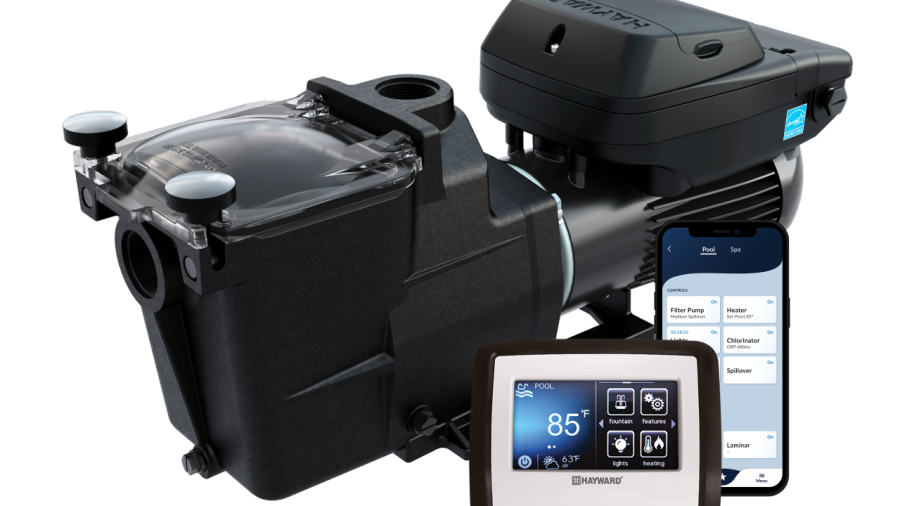
One of the most common pumps we see is the Hayward Super Pump—a workhorse single-speed pump that has been installed in countless pools over the years. Reliable as it is, it eventually fails like any mechanical device.
When a Super Pump fails, there are two clear upgrade opportunities.
1. Upgrade to a Variable Speed Pump
Replacing a single-speed pump with a variable speed pump is one of the highest-ROI upgrades available to pool owners.
- Significant energy savings
- Typical ROI of about two years
- Quieter operation
- Longer service life
Even if your initial goal is simply “get the pool running again,” this upgrade immediately turns a repair into long-term savings.
2. Add Automation — at a Bundled, Discounted Price
Here’s where timing matters.
Hayward offers automation packages that include the OMNI control system in the box when purchased together with qualifying equipment. When bought as a package, the OMNI system is heavily discounted compared to adding automation later as a standalone upgrade.
That means:
- App-based control is added at a reduced cost
- Future automation capability is built in from day one
- You avoid paying full retail down the road
When equipment is already being replaced, this bundled approach is often the least expensive moment to add automation.
Salt Systems: Another Opportunity to Upgrade Smarter
Salt systems present a similar opportunity.
Upgrading an older salt system—or adding one where none existed—offers real benefits:
- Softer-feeling water
- Reduced ongoing chlorine costs
- Continuous, electronic chlorination
- Less manual chemical handling
Hayward also offers salt systems packaged together with OMNI automation, meaning a salt system replacement can simultaneously become an automation upgrade—again, at a bundled price that’s significantly lower than purchasing the components separately.
In other words, replacing one aging piece of equipment can unlock value across the entire pool system.
Don’t Just Replace — Optimize
The most common mistake pool owners make during equipment failure is choosing a like-for-like replacement under pressure.
In reality:
- The labor is already being done
- The system is already offline
- The incremental cost between “replace” and “upgrade” is often smaller than expected
Failure is the moment when upgrading costs the least and delivers the most.
Our Philosophy
We don’t believe in upgrading for the sake of upgrading. We believe in making smart, well-timed decisions that align with how pools are actually built in our area.
In a market dominated by Hayward equipment, their retrofit and bundled-package ecosystem allows pool owners to:
- Restore function quickly
- Reduce long-term operating costs
- Add automation at the most economical moment
- Improve the overall pool experience
Sometimes, the smartest upgrades don’t start with a plan—they start with a failure.
Handled properly, that’s not a setback. That’s failing upward.
Written by: Mark Leaman President, Vaughan Pool Supplies York Pool Services Inc. Etobicoke Pool Services Inc. Richmark Pool Services Inc.